The Tony Danza Show cancellation
I'd Like to Apologize to Every Teacher I Ever HadThe Tony Danza Show cancellation is the pivotal professional and personal rupture that redirects Tony Danza from television entertainment toward a real classroom. The cancellation closes a program through which he had combined celebrity with public service, but it also exposes the limits of that platform: he could improve individual schoolrooms, yet could not remake the public-school system from a studio. In the aftermath, the loss of the show becomes inseparable from questions of age, family, vocation, and the possibility of beginning again.
The Show and Its Public Mission
The program had occupied a privileged place in Tony Danza’s life by 2007. He was two years into hosting a live, one-hour talk show in New York City, broadcast every weekday morning from ten to eleven on the ABC network, after Live! with Regis and Kelly and before The View. The schedule and setting gave him the intoxicating sense that he was “the king of New York,” while the program offered more than visibility: it gave him a platform for civic intervention.
The clearest expression of that mission was the “School Room Makeovers” segment. Producers enlisted charitable corporations to donate equipment, then brought a camera crew into impoverished schools to rebuild science laboratories, gyms, art rooms, and reading rooms. When one music department possessed only six instruments for four hundred children, the program approached Casio and C. G. Conn for keyboards and brass instruments. The room was rebuilt and reequipped, and the school eventually had a jazz orchestra. For Tony, such work revealed both the usefulness and the insufficiency of television. Given the opportunity, he would have used the show to rebuild every public school in New York, but the program itself was canceled.
Immediate Personal Consequences
The cancellation was professionally familiar but personally destabilizing. Tony recognized that television actors routinely face canceled shows, yet this ending arrived alongside the separation of Tony and his wife after twenty years of marriage. Only the youngest of their three children still lived at home in Los Angeles, leaving him in a period when the structures that had organized his adult identity were loosening at once.
Age sharpened the shock. Tony was approaching sixty and treated that age as a warning, recalling that his father had lived only to sixty-two. The thought that time might be running short transformed the cancellation from an ordinary occupational hazard into evidence that a decisive choice could no longer be postponed. He began asking what had made the talk show meaningful and saw that the school makeovers had reached backward into his own history, toward the vocational dream he had held in college.
From Television to the Classroom
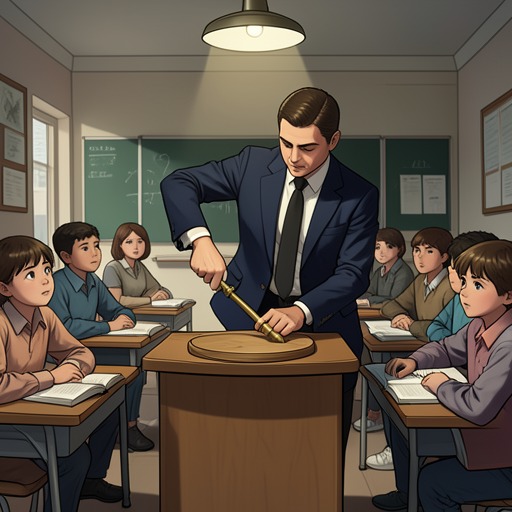
Tony had earned a history degree and originally planned to teach. Boxing and acting diverted him from that path, although his television character on Who’s the Boss? eventually became a teacher, allowing him to enact the abandoned vocation symbolically. The cancellation made the distinction between playing a teacher and teaching real students impossible to ignore. He began to consider returning to the road not taken, believing that the classroom remained open and that he could still make a contribution worthy of his children’s pride.
A Teach For America documentary supplied the immediate emotional catalyst. The film followed teachers in Baltimore and ended with a production of Bye Bye Birdie whose young performers received applause from only about seven audience members. Tony contrasted that nearly empty audience with the packed family, friend, and teacher audiences he had known from his own children’s private schools. The disparity made the educational divide concrete: the cancellation had removed his existing public platform, but it also released him to confront the public-school inequality that his program had only briefly illuminated.
The transition was not automatic or fearless. Tony admitted that beginning a third-act career frightened him almost as much as it attracted him. He deliberately told friends about his plan because speaking it aloud would make retreat more difficult. That openness, however, immediately drew television back into the decision: an executive producer proposed making the teaching venture a reality show, creating the contradiction at the center of the later project. Tony wanted to stop acting and become a teacher, not combine teaching with show business.
The Cancellation’s Media Paradox
Tony initially rejected the reality-show idea because real students and their actual education would be exposed to producers whose first priority was dramatic appeal. He feared that a classroom series would compromise or exploit the students, and he stated that even high ratings would represent failure if the students did not receive the quality of teaching they needed and deserved. The cancellation therefore initiated a project that Tony regarded with suspicion: television could publicize educational crisis, but its commercial logic could also distort the classroom.
That ethical concern shaped his proposed production method. Tony insisted that the children come first, that the cameras operate observationally, and that the footage be shaped only after real events occurred. He rejected soft scripting, forced drama, and manufactured conflict. The distinction mattered because the old program had accustomed him to television as a tool for doing good, while the new project required him to defend education against the pressures of television production itself.
The tension later became visible during the production of Teach. Leslie Grief complained after a peaceful Washington trip that the show had “nothing” because the students had been engaged and learning rather than embroiled in spectacle. Tony saw precisely those qualities as the point. At another moment, a show runner urged David Cohn, off camera, to intensify criticism of Tony during a staged hallway evaluation. David objected that he had not agreed to become an actor, and the incident convinced both David and Tony that production might be nudging school conflicts into existence. The irony was severe: the cancellation of Tony’s talk show had sent him toward education, but the replacement television project threatened to reproduce the very entertainment priorities he had hoped to escape.
Long-Term Meaning
The loss of the talk show also altered Tony’s family relationships. During the school year, he struggled to return home and worried that his attention had shifted so completely toward students that his family might experience the change as another absence. When his elder daughter answered that his delayed return was acceptable, he could not tell whether she meant that she understood the importance of his work or that he had already missed enough of her life for his presence to make little difference. The cancellation thus forms part of a continuing pattern of vocational movement and domestic cost rather than a self-contained career episode.
Its consequences also remained present when Tony questioned whether he would teach again. After confronting the emotional burden of a student’s foster-care crisis, he told Lynn Dixon that, at his age, he was unsure whether he wanted to care that much about anything. Her answer—that caring intensely was what the work required—reframed the cancellation’s legacy. Television had ended, but the deeper question was whether Tony could accept a profession whose demands were not episodic, scripted, or safely bounded.
By the end of the year, Tony’s decision to leave teaching was connected not to a loss of commitment but to the competing obligations of being a husband and father and to his recognition that teaching was extraordinarily hard work. The cancellation had first opened the possibility of a new life; the experience that followed taught him that a new vocation could be morally serious without being permanently sustainable. Its decisive significance lies in that double movement: the end of The Tony Danza Show is both the wound that propels Tony toward the classroom and the event that makes his later understanding of work, family, and public responsibility possible.